Saturday, March 29, 2008

Tuesday, March 25, 2008
To Ascertain the Top Cards While Riffling...
Erdnase says to slightly injog to assist in glimpsing the top card at the end of a riffle shuffle. He provides the following illustration:

Okay, so just jog the card over to the right and take a peek during the end of the shuffle, right?
Wrong.
Jogging the card to the right does not assist in ANY way the glimpsing of the top card at the end of the riffle. Instead, it looks retarded.
Erdnase instructs to “slightly injog the top card... as explained in treatment of "Blind Riffles," under caption, "No. 1 to Retain Top Stock."
So what does he say in the Blind Riffles section? Let’s take look at page 33:
“Raise the thumb corners, and at the same moment injog the top card of the left-hand packet by drawing it in a little over the left thumb, with the first finger of the left hand”
So the top card should be injogged to a position on top of the left thumb. In this context, the thumb is used like a ramp angling the card further upwards, so the index can be glanced. Observe the following crappy picture from my cell phone:

Putting that photo up here from my phone just cost me $.35. How’s that for dedication to my readers?
Need more verification? How about the image Erdnase uses himself to demonstrate the jogged position for the top card during "No. 1 to Retain Top Stock"

That’s not a tumor Marshall D. Smith is drawing, that’s a card above the left thumb.

Okay, so just jog the card over to the right and take a peek during the end of the shuffle, right?
Wrong.
Jogging the card to the right does not assist in ANY way the glimpsing of the top card at the end of the riffle. Instead, it looks retarded.
Erdnase instructs to “slightly injog the top card... as explained in treatment of "Blind Riffles," under caption, "No. 1 to Retain Top Stock."
So what does he say in the Blind Riffles section? Let’s take look at page 33:
“Raise the thumb corners, and at the same moment injog the top card of the left-hand packet by drawing it in a little over the left thumb, with the first finger of the left hand”
So the top card should be injogged to a position on top of the left thumb. In this context, the thumb is used like a ramp angling the card further upwards, so the index can be glanced. Observe the following crappy picture from my cell phone:

Putting that photo up here from my phone just cost me $.35. How’s that for dedication to my readers?
Need more verification? How about the image Erdnase uses himself to demonstrate the jogged position for the top card during "No. 1 to Retain Top Stock"

That’s not a tumor Marshall D. Smith is drawing, that’s a card above the left thumb.
Saturday, March 22, 2008
My Uncles Card Trick (aka 21 card trick)
These must be the instructions everyone follows when they interrupt your performance to show the 21 card trick
My Uncles Card Trick
Patter: awkward Silence.
Step 1: Shuffle the cards aggressively. The more you bend the cards, the better the trick will work.
Step 2: Immediately forget what you’re supposed to do. Repeat step 1.
Step 3: Deal the cards in three rows of seven. If possible, deal into a puddle of liquid on the table- this makes the trick seem more impossible.
Step 4: Instruct them to pick a card. After they blurt it out, instruct them to pick another and not say it. Give these instructions as confusing as possible (this is what magicians mean by “misdirection”)
Step 5: Place remainder of deck in puddle on table.
Step 7: Forget what to do again.
Step 8: Ask which row their card is in and pick up the cards in that certain order. Make the pick up slow, deliberate, and obvious.
Step 9: Deal the cards out again. Take your time- there’s no reason to rush, it’s your time to shine.
Step 10: Repeat step 8
Step 11: Remember that you forgot step 6, but continue anyway.
Step 12: Repeat steps 3 and 8 again. If you find a weird card (one with two faces, two backs, or anything else fishy) bring everyones attention to it.
Step 13: Blurt out their card when the spectators don’t expect it. No need for drama or suspense, it’s best if you use the element of surprise here.
Step 14: Immediately after conclusion, expose the entire effect- even if they pretend like they aren’t interested. Hand the deck back to the magician even though no one realizes the trick is over.
My Uncles Card Trick
Patter: awkward Silence.
Step 1: Shuffle the cards aggressively. The more you bend the cards, the better the trick will work.
Step 2: Immediately forget what you’re supposed to do. Repeat step 1.
Step 3: Deal the cards in three rows of seven. If possible, deal into a puddle of liquid on the table- this makes the trick seem more impossible.
Step 4: Instruct them to pick a card. After they blurt it out, instruct them to pick another and not say it. Give these instructions as confusing as possible (this is what magicians mean by “misdirection”)
Step 5: Place remainder of deck in puddle on table.
Step 7: Forget what to do again.
Step 8: Ask which row their card is in and pick up the cards in that certain order. Make the pick up slow, deliberate, and obvious.
Step 9: Deal the cards out again. Take your time- there’s no reason to rush, it’s your time to shine.
Step 10: Repeat step 8
Step 11: Remember that you forgot step 6, but continue anyway.
Step 12: Repeat steps 3 and 8 again. If you find a weird card (one with two faces, two backs, or anything else fishy) bring everyones attention to it.
Step 13: Blurt out their card when the spectators don’t expect it. No need for drama or suspense, it’s best if you use the element of surprise here.
Step 14: Immediately after conclusion, expose the entire effect- even if they pretend like they aren’t interested. Hand the deck back to the magician even though no one realizes the trick is over.
Wednesday, March 19, 2008
Notes on the Open Shift...
Tips:
A reason the open shift is so difficult is the fact that erdnase only instructs you to control the top packet with the nail of the right index finger and left thumb. The problem with this is the balance required does not allow optimum control. This is why the shift is rushed by many performers making it look like they have a “spasm” (to steal a word Marlo used about the SWE shift).
When Erdnase says “the shift can be made like a flash” I theorize that he is talking about the sole motion of reversing the packets. Not the set up. I say this because when describing other shifts in the book, erdnase uses the term ‘shift’ solely when he is transposing the packets.
The open shift spasm can be solved by adding one simple step. Once you are in the position illustrated in figure 70, and finished clearing the packets of each other, you reposition the right hand by sliding it to the left and gripping the top packet (which will be shifted to bottom) by the thumb and middle finger of your right hand. The left fingers assist in holding the bottom packet during the sliding motion. At this point you can release your left hand completely and maintain control of the entire deck by only the right hand; gripping the bottom packet with the right middle, ring, and pinky fingers.
The position of the right hand in this grip also greatly reduces the risk of flashing the bottom packet as the top is pushed with the right index finger. This makes the shift slightly less angley and allows greater versatility.
Covers
-Movement from right to extreme left
This is the most common cover for the shift. a break is secured and the deck is carried to the extreme left of the performer, so that the back of the top card is in the direct vision of the player sitting opposite the dealer. The shift is then performed before dealing to the first player.
The problem with performing the shift this way is the momentary pause before he deal. Even if it’s executed in a ‘flash’ the pause is unexplained and draws attention.
-Tapping the table
A break is secured and the body is turned slightly to the left. The current top packet is slid toward the left palm by the right index finger, and regripped in the middle of the short sides by the middle finger and thumb of right hand (see the “tips” section at the beginning of this entry) . The left fingers extend, and the top packet is tapped against the table. In repositioning the deck the packets are shifted in a squaring motion.
An alternate method of using the table tap to cover the move would be to complete the cut with the left hand, securing a break, and performing the shift with the face of the deck facing the performer.
-Using table edge
The cut is completed by the right hand (fingers and thumb on opposite short sides) and the entire deck is slid along the table so the long edges are parallel to the table edge. As the bottom pack remains tabled, the right index finger begins to push the top packet into the awaiting left hand. The right middle finger and thumb then slide the tabled packet onto the packet in the left hand as it is raised for the deal, completing the shift.
Getting the break
-Offsetting the bottom packet when completing the cut.
Deck is tabled in front of you, with the short edges running parallel to the table edge. The cut is made by the right hand placing the top half to the left . As the cut is completed the packets are offset by placing the original bottom packet a half inch further to the left, creating a step which is concealed by the back of the right hand. the right index finger is placed on the step while the deck is picked up in preparation for the shift.
-Left Handed
The cut is completed by the left hand with the palm facing the table. The thumb is on one long end and the fingers on the other. When placing the packets together, the fleshy pad of the left ring finger is placed between the packets. The deck is then slid to the table edge and the right hand approaches palm up from underneath; grasping the top packet with the middle finger and thumb on the short edges. The left ring finger is then extracted, transferring the break into a step for the right index finger to execute the shift.
-Traditional Erdnase method
“When the cut is made, pick up the packet that was under, by the sides, near end, between second and third fingers and thumb of right hand, and lay it on top of packet cut-off, so that the then under packet forms a jog or protrudes about quarter of an inch toward the right wrist. Pick up the two packets the instant the one is placed on the other, by a sliding movement, with the fingers in the same position, and place the deck across the left palm with the left thumb on top to hold it in position. Then release sides of deck with right hand and seize ends to square up. In doing so the right thumb comes against the inner end and in contact with the jog or projecting under packet. Press this down a little with the thumb and square ends of deck, forming break at thumb end. Now shift the left hand slightly so as to hold the break with the tip of the left little finger at the side, close to the end”
Alternate uses
-Color change
Erdnase suggests using the Open shift as a transformation on page 136. He suggests performing the shift with the deck turned face upwards.
When Erdnase says ‘turned face upwards” does he mean the cards are face up in the hand with the performer facing his left- or is the performer facing his right with the hands rotated clockwise to display the faces?
It’s interesting to think about. When Erdnase wants the deck face up for a transformation he states it pretty clearly using terms like “with the back of deck to the palm” (Transformation, first method pg. 154) or even “with the deck face up” (SWE Shift pg. 139).
In fact, Erdnase never refers to a face up deck as being turned upward (s) anywhere in the text. I believe Erdnase meant for the performer to be turned to his right rotating his hands to display the face of the bottom card.
Personally I think when the performer is turned to his left with the cards face up, there are far better ways to do a transformation anyway.
A reason the open shift is so difficult is the fact that erdnase only instructs you to control the top packet with the nail of the right index finger and left thumb. The problem with this is the balance required does not allow optimum control. This is why the shift is rushed by many performers making it look like they have a “spasm” (to steal a word Marlo used about the SWE shift).
When Erdnase says “the shift can be made like a flash” I theorize that he is talking about the sole motion of reversing the packets. Not the set up. I say this because when describing other shifts in the book, erdnase uses the term ‘shift’ solely when he is transposing the packets.
The open shift spasm can be solved by adding one simple step. Once you are in the position illustrated in figure 70, and finished clearing the packets of each other, you reposition the right hand by sliding it to the left and gripping the top packet (which will be shifted to bottom) by the thumb and middle finger of your right hand. The left fingers assist in holding the bottom packet during the sliding motion. At this point you can release your left hand completely and maintain control of the entire deck by only the right hand; gripping the bottom packet with the right middle, ring, and pinky fingers.
The position of the right hand in this grip also greatly reduces the risk of flashing the bottom packet as the top is pushed with the right index finger. This makes the shift slightly less angley and allows greater versatility.
Covers
-Movement from right to extreme left
This is the most common cover for the shift. a break is secured and the deck is carried to the extreme left of the performer, so that the back of the top card is in the direct vision of the player sitting opposite the dealer. The shift is then performed before dealing to the first player.
The problem with performing the shift this way is the momentary pause before he deal. Even if it’s executed in a ‘flash’ the pause is unexplained and draws attention.
-Tapping the table
A break is secured and the body is turned slightly to the left. The current top packet is slid toward the left palm by the right index finger, and regripped in the middle of the short sides by the middle finger and thumb of right hand (see the “tips” section at the beginning of this entry) . The left fingers extend, and the top packet is tapped against the table. In repositioning the deck the packets are shifted in a squaring motion.
An alternate method of using the table tap to cover the move would be to complete the cut with the left hand, securing a break, and performing the shift with the face of the deck facing the performer.
-Using table edge
The cut is completed by the right hand (fingers and thumb on opposite short sides) and the entire deck is slid along the table so the long edges are parallel to the table edge. As the bottom pack remains tabled, the right index finger begins to push the top packet into the awaiting left hand. The right middle finger and thumb then slide the tabled packet onto the packet in the left hand as it is raised for the deal, completing the shift.
Getting the break
-Offsetting the bottom packet when completing the cut.
Deck is tabled in front of you, with the short edges running parallel to the table edge. The cut is made by the right hand placing the top half to the left . As the cut is completed the packets are offset by placing the original bottom packet a half inch further to the left, creating a step which is concealed by the back of the right hand. the right index finger is placed on the step while the deck is picked up in preparation for the shift.
-Left Handed
The cut is completed by the left hand with the palm facing the table. The thumb is on one long end and the fingers on the other. When placing the packets together, the fleshy pad of the left ring finger is placed between the packets. The deck is then slid to the table edge and the right hand approaches palm up from underneath; grasping the top packet with the middle finger and thumb on the short edges. The left ring finger is then extracted, transferring the break into a step for the right index finger to execute the shift.
-Traditional Erdnase method
“When the cut is made, pick up the packet that was under, by the sides, near end, between second and third fingers and thumb of right hand, and lay it on top of packet cut-off, so that the then under packet forms a jog or protrudes about quarter of an inch toward the right wrist. Pick up the two packets the instant the one is placed on the other, by a sliding movement, with the fingers in the same position, and place the deck across the left palm with the left thumb on top to hold it in position. Then release sides of deck with right hand and seize ends to square up. In doing so the right thumb comes against the inner end and in contact with the jog or projecting under packet. Press this down a little with the thumb and square ends of deck, forming break at thumb end. Now shift the left hand slightly so as to hold the break with the tip of the left little finger at the side, close to the end”
Alternate uses
-Color change
Erdnase suggests using the Open shift as a transformation on page 136. He suggests performing the shift with the deck turned face upwards.
When Erdnase says ‘turned face upwards” does he mean the cards are face up in the hand with the performer facing his left- or is the performer facing his right with the hands rotated clockwise to display the faces?
It’s interesting to think about. When Erdnase wants the deck face up for a transformation he states it pretty clearly using terms like “with the back of deck to the palm” (Transformation, first method pg. 154) or even “with the deck face up” (SWE Shift pg. 139).
In fact, Erdnase never refers to a face up deck as being turned upward (s) anywhere in the text. I believe Erdnase meant for the performer to be turned to his right rotating his hands to display the face of the bottom card.
Personally I think when the performer is turned to his left with the cards face up, there are far better ways to do a transformation anyway.
Friday, March 14, 2008
Marlo on Erdnase
I sure do like the trivia quiz on page 240 in 'Marlo on Erdnase'. I wonder where they got some of those questions? See Wessmiller Trivia Quiz from August 15th 2007 I also posted this same quiz on the Genii forum. What do you think?
be well,
JW
be well,
JW
Wednesday, August 29, 2007
Thinking outside the Erdnase box....
Maybe we’re all wrong with the way we think the Open Shift is to be used as a transformation. Erdnase never says to hold the deck back to palm to start with. He says “with the face of the deck turned upward...” Could he possibly just mean with the face turned upwards toward the company?
With the SWE as a transformation he openly says “with the deck face up”
And in other parts of the book he uses the phrase “back to palm” when he wants the deck face up.
The point of this post is to make you look at Erdnase with fresh eyes. Get your own opinion of what Erdnase is saying- don’t take other peoples word for it.
When I first started studying Erdnase I didn't have anyone to talk about it with. I always pronounced it Erdnasey. Haha- who knows?
With the SWE as a transformation he openly says “with the deck face up”
And in other parts of the book he uses the phrase “back to palm” when he wants the deck face up.
The point of this post is to make you look at Erdnase with fresh eyes. Get your own opinion of what Erdnase is saying- don’t take other peoples word for it.
When I first started studying Erdnase I didn't have anyone to talk about it with. I always pronounced it Erdnasey. Haha- who knows?
Friday, August 17, 2007
Notes on the SWE shift
I just stumbled across these notes because someone asked a question about the SWE on another website. Maybe this can help some of you out there that have trouble with the move.
Covers for the move:
-Tapping the table (Wesley James)
With the body slightly turned to the left the short edge of the deck is tapped against the table while performing the shift
-Blowing on the deck (Chris Kenner)
While bringing the deck up to the mouth to blow on it, perform the shift.
-Rotating the deck
Have the long side of the deck almost contacting table- top card facing audience. In rotating the deck (so the back of the top card faces toward yourself) perform the shift.
-Change the style of cut (Magic Cafe member Pavloter)
With the deck tabled, cut off top half and place in left hand in SWE position. Pick up original bottom half from table and perform shift while apparently placing the packets together to complete cut in the hands
-Perform at the table edge (Magic Cafe member Papermechanic)
With the deck tabled, cut top half away from performer and place on table. Complete the cut on the table holding a break. Slide deck to table edge and perform shift pinning the bottom packet (which will be shifted to top) to the table with the right second and third finger. Left hand pulls back top packet and completes shift.
Getting the break for the SWE
-Diagonal placement
With deck tabled, cut top half away from performer. Grab original bottom packet with right hand and place diagonally (almost so the two packets form a very tight “X”) creating the ‘step’ to utilize when cards are picked up from table.
-Pull back method a la Steve Freeman
With deck tabled, cut top half away from performer. Grab original bottom packet with right hand and place further forward on original top packet, leaving a step below the right thumb. In sliding deck back toward performer apply pressure down with right thumb while pulling original bottom packet back with right fingers to form break at back.
-From deal (the way Erdnase would probably do it)
Hold break with pinky while dealing. Bend left wrist so index finger points toward performer. bring right hand over deck, palm down (fingers contacting left thumb) allowing right thumb to pick up pinky break. Release left hand and turn counter clockwise inserting pinky as in Fig 72 ready for shift.
Tips
-Control the right thumb- do not let it kick out when performing shift. Keep it as far down as possible.
-Focus on top packet. Pull it back as fast as possible. It may help to perform the shift in front of a wall or hard object to prevent you from kicking the bottom packet forward. (I’m told this is how Chris Kenner practices)
-Make sure the deck stays as square as possible. Do not allow the left fingers to get in-between the packets when the bottom is being shifted to top.
Alternate Uses for SWE
-False Cut
-Dead Cutting to any card
-Elevator effects
-Transformation
Covers for the move:
-Tapping the table (Wesley James)
With the body slightly turned to the left the short edge of the deck is tapped against the table while performing the shift
-Blowing on the deck (Chris Kenner)
While bringing the deck up to the mouth to blow on it, perform the shift.
-Rotating the deck
Have the long side of the deck almost contacting table- top card facing audience. In rotating the deck (so the back of the top card faces toward yourself) perform the shift.
-Change the style of cut (Magic Cafe member Pavloter)
With the deck tabled, cut off top half and place in left hand in SWE position. Pick up original bottom half from table and perform shift while apparently placing the packets together to complete cut in the hands
-Perform at the table edge (Magic Cafe member Papermechanic)
With the deck tabled, cut top half away from performer and place on table. Complete the cut on the table holding a break. Slide deck to table edge and perform shift pinning the bottom packet (which will be shifted to top) to the table with the right second and third finger. Left hand pulls back top packet and completes shift.
Getting the break for the SWE
-Diagonal placement
With deck tabled, cut top half away from performer. Grab original bottom packet with right hand and place diagonally (almost so the two packets form a very tight “X”) creating the ‘step’ to utilize when cards are picked up from table.
-Pull back method a la Steve Freeman
With deck tabled, cut top half away from performer. Grab original bottom packet with right hand and place further forward on original top packet, leaving a step below the right thumb. In sliding deck back toward performer apply pressure down with right thumb while pulling original bottom packet back with right fingers to form break at back.
-From deal (the way Erdnase would probably do it)
Hold break with pinky while dealing. Bend left wrist so index finger points toward performer. bring right hand over deck, palm down (fingers contacting left thumb) allowing right thumb to pick up pinky break. Release left hand and turn counter clockwise inserting pinky as in Fig 72 ready for shift.
Tips
-Control the right thumb- do not let it kick out when performing shift. Keep it as far down as possible.
-Focus on top packet. Pull it back as fast as possible. It may help to perform the shift in front of a wall or hard object to prevent you from kicking the bottom packet forward. (I’m told this is how Chris Kenner practices)
-Make sure the deck stays as square as possible. Do not allow the left fingers to get in-between the packets when the bottom is being shifted to top.
Alternate Uses for SWE
-False Cut
-Dead Cutting to any card
-Elevator effects
-Transformation
Wednesday, August 15, 2007
Wessmiller Erdnase Quiz
Here it is in all it's glory- my finished Erdnase trivia quiz!
1. Name two games Erdnase admits to being cheated at.
2. Although he mentions the use of riffle stacking is limited, where does Erdnase suggest doing it to add two cards to a stock?
3. Does Erdnase ever mention palm reading? Where?
4. At one point Erdnase makes a simile comparing himself to a bird- where?
5. When does Erdnase mention performing for children?
6. Where does Erdnase mention a double lift?
7. Where does Erdnase mention a key card?
8. On what page does Erdnase mention 9 separate passes?
9. Erdnase gives step by step directions for two double dukes. Where are they?
10. Where does Erdnase say that magicians never shuffle on a table?
11. When is the last time Erdnase mentions friction in the book?
12. Where does Erdnase mistakenly mention altering women’s clothing?
1. Name two games Erdnase admits to being cheated at.
2. Although he mentions the use of riffle stacking is limited, where does Erdnase suggest doing it to add two cards to a stock?
3. Does Erdnase ever mention palm reading? Where?
4. At one point Erdnase makes a simile comparing himself to a bird- where?
5. When does Erdnase mention performing for children?
6. Where does Erdnase mention a double lift?
7. Where does Erdnase mention a key card?
8. On what page does Erdnase mention 9 separate passes?
9. Erdnase gives step by step directions for two double dukes. Where are they?
10. Where does Erdnase say that magicians never shuffle on a table?
11. When is the last time Erdnase mentions friction in the book?
12. Where does Erdnase mistakenly mention altering women’s clothing?
Sunday, August 05, 2007
More Erdnase Trivia...
While Erdnase admits the use of riffle stacking is "limited", where does he suggest using riffle stacking to add two cards to ensure the right cards go to the dealer?
Tuesday, July 31, 2007
Trick Question from Erdnase...
Okay so I asked Darwin if he considered this fair Erdnase trivia and he said it's too much of a trick question. But I'd be impressed if anyone can answer it so I'll post it anyway.
Where does Erdnase mistakenly mention altering clothing?
It's inbetween pages 20-40 in Dover edition.
50-70 in most other editions.
I'll give a new hint everyday until someone gets it in the comments.
Where does Erdnase mistakenly mention altering clothing?
It's inbetween pages 20-40 in Dover edition.
50-70 in most other editions.
I'll give a new hint everyday until someone gets it in the comments.
Tuesday, July 24, 2007
Tribute to Erdnase
Every year or two I make a new 'tribute to Erdnase' video just to keep a log of my improvement. It's taken me a few weeks, but I've finally finished the latest video.
Wednesday, July 18, 2007
Can you cheat at Poker?
Laymen have very little interest in actual gambling technique. When someone asks to see some "cheating moves" they want to be entertained. They want something with a beginning, a middle, and an end. You can start showing your chops by doing some false deals, mucks, and stacking- but the end result will be maybe a smile and a nod. This is not a good reaction especially if you want to sell DVDs. There needs to be structure to your demo's, and sometimes a kicker ending.
On the other hand...
There are a few people you run into that actually know what they're talking about and really want to see some of the work. I was called out miserably once by performing Harry Loraynes Poker Deal for a real hustler.
The bottom line is that you need to know your audience, start off with something small and go off their reaction.
P.S. I'm not talking about paid gigs, those are easy to plan out. I'm talking about those impulsive moments where you are on the spot suddenly without any time to prepare.
On the other hand...
There are a few people you run into that actually know what they're talking about and really want to see some of the work. I was called out miserably once by performing Harry Loraynes Poker Deal for a real hustler.
The bottom line is that you need to know your audience, start off with something small and go off their reaction.
P.S. I'm not talking about paid gigs, those are easy to plan out. I'm talking about those impulsive moments where you are on the spot suddenly without any time to prepare.
Friday, June 08, 2007
Videos at MVD
There's a difference between asking people to critique your pass vs saying "look how good I am". A video with a bunch of transitions/cuts showing us your best passes out of who knows how many takes is not meant to be critiqued. Seems like false advertising to me.
Monday, February 12, 2007
"Work on your Zarrow"
Why is it that whenever someone posts a video with a zarrow someone always comments with "work on your Zarrow"?
Let's face it, anyone that can do a zarrow can spot one. It's not a move that can be performed without a single tell. The only way to hide it is to totally cover it- which is just as bad.
Every magician wants to think he is exceptional at what he does. By telling someone to "work on your zarrow" they are just trying to let everyone know that they could see the move. Let's give good zarrows their due credit people.
Let's face it, anyone that can do a zarrow can spot one. It's not a move that can be performed without a single tell. The only way to hide it is to totally cover it- which is just as bad.
Every magician wants to think he is exceptional at what he does. By telling someone to "work on your zarrow" they are just trying to let everyone know that they could see the move. Let's give good zarrows their due credit people.
Thursday, April 27, 2006
How to demo a shift and not look like an idiot..
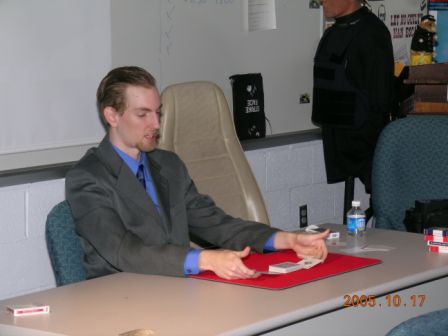
It has always baffled me why magicians, when demonstrating a gambling shift, will place the deck on the table and cut in a manner that wouldn't work in a game. They place the deck on the table with the long edges going perpendicular to their body, and cut the deck to the right or left.
Okay so far...
But then when placing the bottom half on the original top half, they pick up the deck with fingers on one short end and thumb on the other. This works great when the cut is performed DIRECTLY in front of you, but if you tried it in a game, you would quickly find that your elbow goes into the face of the person who cut the cards.
So then what do we do?
Take a look at good ol' Erdnase:
"When the cut is made, pick up the packet that was under, by the sides, near end, between second and third fingers and thumb of right hand, and lay it on top of packet cut-off, so that the then under packet forms a jog or protrudes about quarter of an inch toward the right wrist. Pick up the two packets the instant the one is placed on the other, by a sliding movement, with the fingers in the same position, and place the deck across the left palm with the left thumb on top to hold it in position. Then release sides of deck with right hand and seize ends to square up. In doing so the right thumb comes against the inner end and in contact with the jog or projecting under packet. Press this down a little with the thumb and square ends of deck, forming break at thumb end. Now shift the left hand slightly so as to hold the break with the tip of the left little finger at the side, close to the end"
Problem solved!
Subscribe to:
Posts (Atom)

